- +1 (306)-721-1027
- nusrathfatimaara@gmail.com
- 3806 Albert Street, Golden Mile Professional Offices Unit 1031

Prevention is Better than Cure
Treat the Root Cause, Not Just the Symptoms
3806 Albert Street, Regina SK
Sedentary Lifestyle: The Root of Chronic Disease and the Case for a Paradigm Shift in Healthcare
You've been told that managing chronic disease with lifelong medication is normal. But what if there's another way? Hypertension, diabetes, obesity, and thyroid disorders share a common root: sedentary lifestyle. Physiotherapists and massage therapists don't just mask symptoms — they treat the underlying causes through movement, hands-on therapy, and sustainable lifestyle guidance. Backed by evidence, this approach helps you reduce reliance on medication and build genuine, lasting health.

Introduction
The modern world has engineered physical activity out of daily life. Desk-bound jobs, screen-based entertainment, and mechanized transport have given rise to a global epidemic of sedentary behavior—a lifestyle that forms the fertile ground for hypertension, thyroid dysfunction, diabetes mellitus, and obesity. Yet the prevailing medical response to these acquired ailments remains overwhelmingly pharmaceutical, often treating symptoms while neglecting the root cause. This article examines the evidence linking sedentary lifestyles to systemic chronic diseases, critiques the conventional disease-management model, and makes the case for a frontline role for physiotherapists and massage therapists in addressing the underlying drivers of modern morbidity.
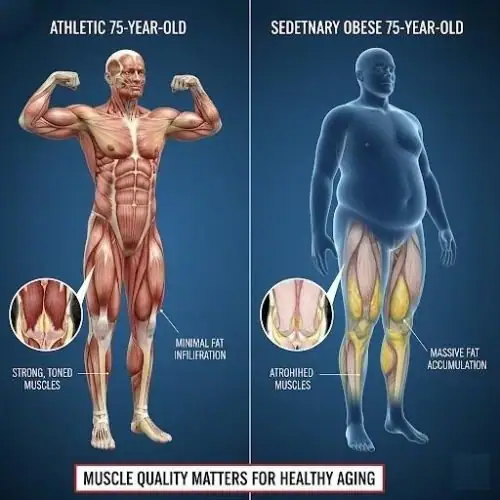

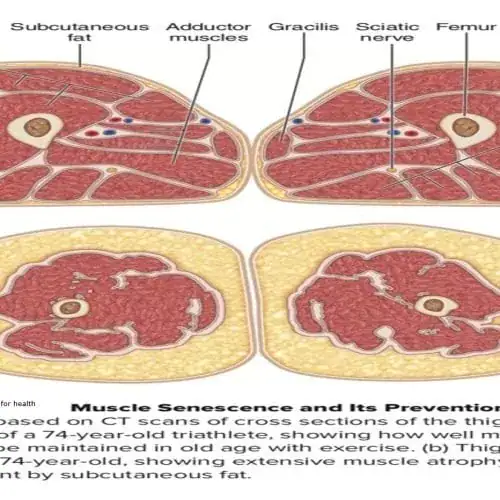
The Evidence: Sedentary Lifestyle as the Common Soil for Chronic Disease
Sedentary behavior and physical inactivity are highly prevalent globally and are associated with a wide range of chronic diseases and premature deaths. The evidence is now unequivocal: sedentary behavior and physical inactivity rank among the leading modifiable risk factors worldwide for cardiovascular disease and all-cause mortality.
Hypertension and Cardiovascular Disease. Prolonged sedentary behavior is a main risk factor for cardiovascular disease and mortality. The physiological mechanisms are well-established—inactivity promotes arterial stiffness, endothelial dysfunction, and elevated peripheral vascular resistance, all of which contribute to sustained blood pressure elevation.
Diabetes Mellitus and Obesity. Sedentary behavior—too much sitting, distinct from too little physical activity—contributes adversely to cardiometabolic health outcomes. Physical inactivity drives insulin resistance, impairs glucose metabolism, and promotes adipose tissue accumulation. Global estimates indicate that at least 5.5% of macrovascular complications and 9.7% of retinopathy related to diabetes are attributable to physical inactivity.
Thyroid Dysfunction. The connection between sedentary behavior and thyroid disorders is increasingly recognized. One cross-sectional study demonstrated direct links between sedentary time and thyroid hormone-related indicators. Body mass index was found to play a mediating role in the association between sedentary time and thyroid function parameters. Among women with subclinical thyroid dysfunction, sedentary lifestyle prevalence reached 88.9% in the subclinical hyperthyroidism group. Thyroid dysfunction affects multiple metabolic parameters—blood pressure, glucose metabolism, and lipid profiles—and both hyperthyroidism and hypothyroidism interrupt insulin sensitivity and adipocyte metabolism.
The global burden is staggering. Physical inactivity is projected to contribute to nearly 500 million new cases of preventable noncommunicable diseases between 2020 and 2030, at a cost exceeding US$300 billion. Low physical activity alone accounted for 555,101 related deaths globally in 2021. A prolonged sedentary behavior pattern is associated with increased risks of several major noncommunicable diseases and all-cause mortality.
The Conventional Model: Symptom Suppression, Not Root-Cause Resolution
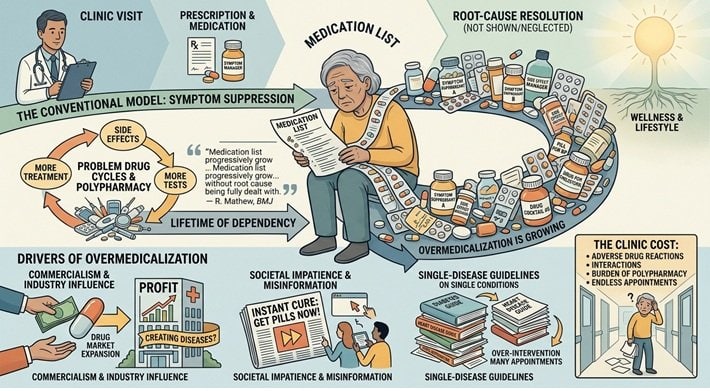
When individuals develop lifestyle-induced chronic conditions, the typical pathway is predictable: a visit to a small clinic or hospital, prescription of medications, and a lifetime of pharmaceutical dependency. This model has become so normalized that healthcare professionals often present lifelong medication as inevitable.
Yet this approach fundamentally fails patients. As Rammya Mathew observes in the BMJ, when patients have a chronic disease diagnosed, “you can see their medication list progressively grow in size, often without the root cause of their illness ever being fully dealt with”. The result is a vicious cycle: patients experience side effects from drug cocktails, which are managed by more tests and more treatment—“problematic polypharmacy” creates a cycle of over-intervention that leads to serious harms, especially in older patients.
This phenomenon is not accidental. Overmedicalization has been recognized as a growing problem, driven by commercialism, mass media misinformation, and societal impatience that fosters excessive dependence on the medical profession. The pharmaceutical industry has been accused of “creating diseases” and fostering medicalization to expand drug markets. Health is now increasingly defined not by wellness but by medication intake—a paradigm that serves commercial interests rather than patient health.
The clinical cost of over-treatment is substantial, including adverse drug reactions, drug interactions, and the burden of polypharmacy. Single-disease guidelines applied to patients with multimorbidity encourage unreasonable numbers of interventions, leaving older patients shuttling between endless hospital appointments.

A Call for Paradigm Shift
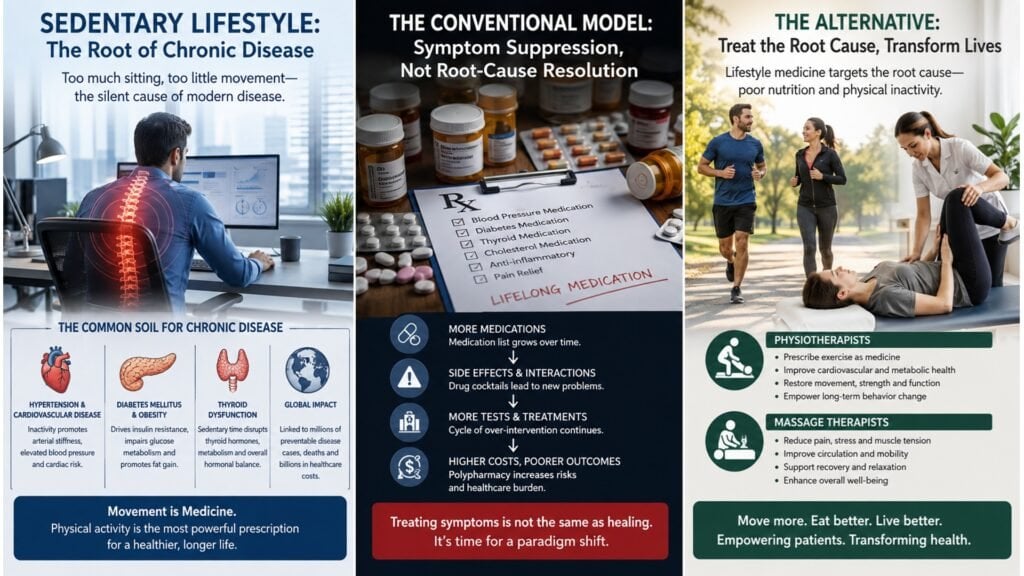
The contrast between the conventional medical model and the lifestyle-centered approach is stark. The former offers lifelong medication that manages symptoms but leaves root causes untouched; the latter offers the possibility of addressing what actually drives disease. This is not to dismiss the legitimate role of pharmaceuticals in acute care or advanced disease management, but to question their dominance as the default response to lifestyle-induced chronic conditions.
Frontline healthcare professionals—physiotherapists, massage therapists, and other allied health practitioners—offer what the conventional system increasingly lacks: time with patients, attention to lifestyle factors, and interventions that target underlying mechanisms rather than surface-level biomarkers. They guide patients toward sustainable behavioral change, not indefinite pharmaceutical dependency.
The World Health Organization has long recognized that physical inactivity is a leading cause of disease and disability, recommending moderate physical activity, tobacco cessation, and healthy nutrition as preventive measures. Adults with chronic conditions should limit sedentary time and replace it with physical activities of various intensities.
Patients deserve better than a lifetime of pill bottles and side effects. They deserve healthcare that asks not just “what is the diagnosis?” but “what is the cause?” and “how can we restore health?” The evidence supports a shift toward physiotherapists and massage therapists as first-line providers for lifestyle-induced chronic conditions—professionals who treat the root cause and guide the public toward genuine health living.
Conclusion
Sedentary lifestyle is not merely a risk factor—it is the common ground upon which hypertension, diabetes, obesity, and thyroid dysfunction take root. The conventional medical response of symptom suppression through lifelong medication perpetuates a cycle of dependency, polypharmacy, and declining quality of life. Evidence from systematic reviews and clinical studies demonstrates that physiotherapist-led interventions and massage therapy can effectively address the underlying drivers of these conditions—improving blood pressure, metabolic markers, and overall health without the burden of chronic pharmaceutical use. It is time to reimagine healthcare delivery, placing lifestyle-centered practitioners at the front line and empowering patients to reclaim their health through root-cause resolution rather than symptom management.
Useful Links
Subscribe Now
Don’t miss our future updates! Get Subscribed Today!
2022 prairieosteopath.ca. All Rights Reserved.