Myofascial Adhesions Treatment in Regina-SK
What Are Myofascial Adhsions?
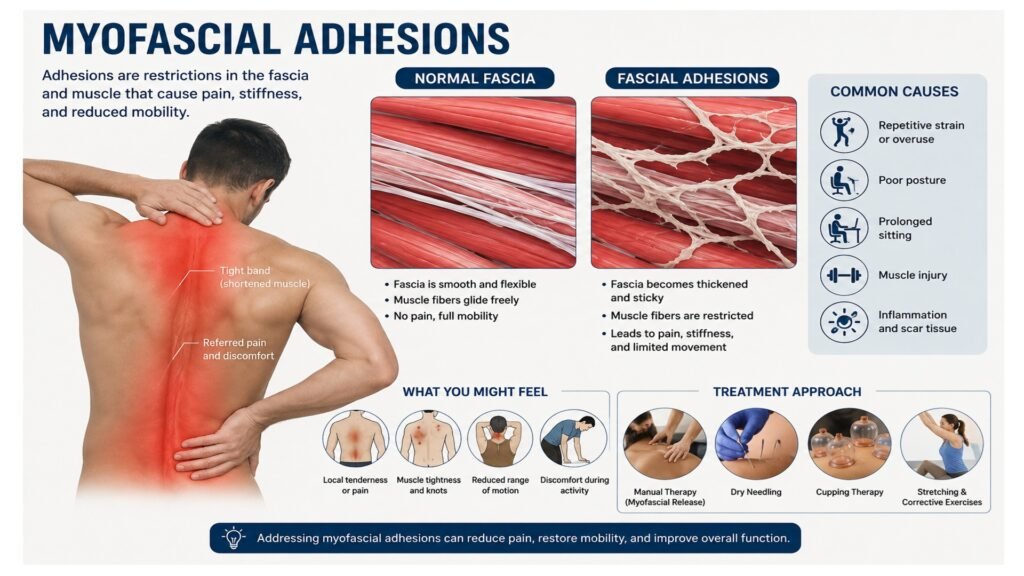
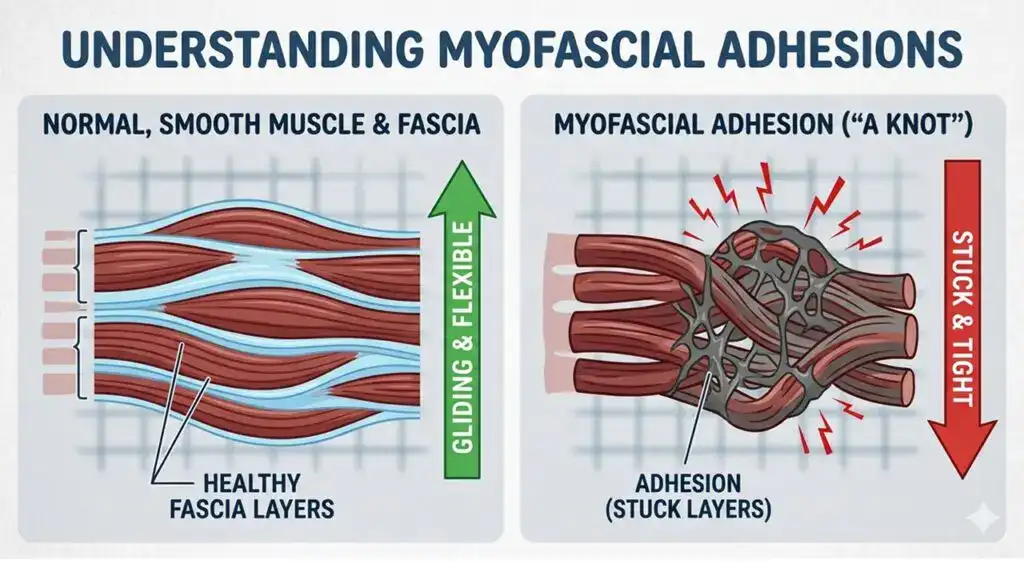
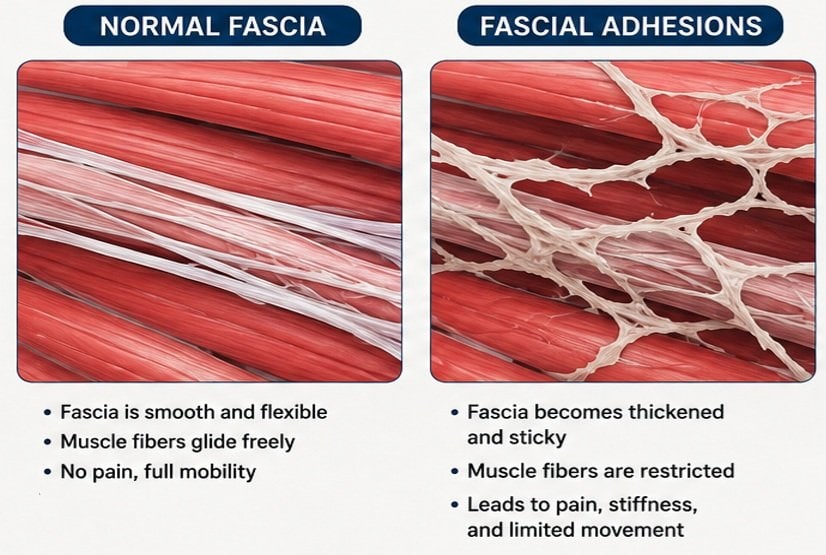
Imagine your muscles are wrapped in a thin, smooth, slippery stocking—that’s your fascia. Fascia is a web of connective tissue that surrounds every muscle, bone, nerve, and organ in your body. It’s supposed to be hydrated and glide like silk.
Sometimes, due to stress, overuse, or injury, this fascia gets damaged. Just like a cut on your skin forms a scab, damaged fascia can become sticky, thickened, and tight. These sticky spots are called adhesions.
Think of an adhesion like a wrinkle in a tablecloth that gets glued down. That wrinkle now pulls on everything around it, restricting movement and causing discomfort.
Myofascial Adhesions
Why Do These Adhesions Form in Our Bodies?
Adhesions are your body’s well-intentioned but clumsy repair system. They form for several common reasons:
Repetitive movements: Doing the same motion over and over (typing, swinging a golf club, lifting boxes) creates micro-tears in the fascia. The body patches these tears with stiff, haphazard collagen fibers—the start of an adhesion.
Acute injuries: A fall, car accident, or muscle strain causes inflammation. As the body heals, it lays down scar tissue inside the fascia, gluing layers together that should slide freely.
Lack of movement / prolonged posture: Sitting at a desk for years without stretching can dehydrate the fascia, causing it to “stick” to underlying muscles.
Surgeries: Any surgical incision cuts through fascia. As the incision heals, adhesions can form between the fascia and the muscle beneath, leading to long-term stiffness.
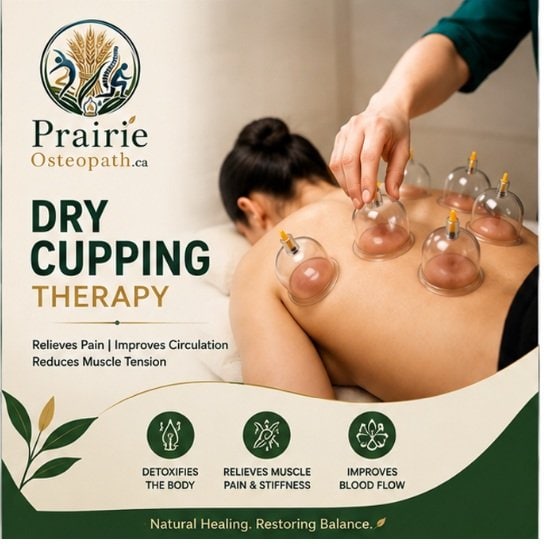
Myofascial Release Techniques (Glide Cupping)

Key Benefits of Myofascial Release
Pain relief: Adhesions pull on nerves and joints. Releasing them stops that tug-of-war.
Restored mobility: You’ll feel like you can reach, twist, and bend without that “stuck” feeling.
Better posture: Releasing chest and hip adhesions allows your skeleton to align naturally.
Reduced headaches and TMJ pain: Many facial and jaw adhesions refer pain to the head.
How to Prevent Adhesions from Coming Back
Move through full ranges of motion daily. Think cat-cow stretch, arm circles, torso twists—not just walking in a straight line.
Hydrate properly. Fascia is mostly water. Drink consistently throughout the day. Dehydrated fascia cracks and sticks.
Stop “parking” in one posture. Every 30–45 minutes, stand up and reach overhead, bend sideways, and roll your shoulders.
Use self-myofascial release 2–3x/week. Spend 2 minutes on a foam roller or lacrosse ball on your tight spots (upper back, glutes, calves). Hold on tender points until they soften—don’t just roll back and forth fast.
Vary your exercise. If you run, add yoga. If you lift weights, add swimming. Different movement patterns keep fascia from setting into fixed, sticky patterns.
Manage stress. Chronic stress tightens the entire fascial web. Deep breathing and good sleep directly help fascia stay pliable.
When to See a Professional
Are You Experiencing Fascia-Related Pain?
It can be tricky to tell if your pain is from a joint, muscle, or fascia. A key characteristic of fascia pain is that it often feels better with movement initially, but worsens later. It also responds well to heat therapy, which helps restore the tissue's elasticity -1.
If you are experiencing persistent muscle tightness, limited mobility, or pain that you just can't seem to "stretch out," you may be dealing with myofascial adhesions.
REACH US
How Can Myofascial Adhesions Be Treated?
While over-the-counter medications can offer temporary relief, they don't address the root cause of the problem -2. Non-invasive manual therapies are considered the most effective and direct way to treat myofascial restrictions
At Prairie Osteopath & Massage Therapy, we specialize in a variety of hands-on approaches to break up adhesions, restore proper movement, and alleviate pain.
REACH US
Osteopathic Manual Therapy (OMT)
Our osteopathic practitioners use a range of gentle, precise techniques to release tension and restore function. A core method is Myofascial Release (MFR). This involves applying gentle, sustained pressure and stretching into the restricted fascia to allow it to "unwind," rehydrate, and regain its natural flexibility -8-15.
Osteopathy takes a whole-body, structural approach. Our practitioners don't just treat the spot that hurts. For example, a study published in 2026 highlighted an osteopathic myofascial release approach that successfully resolved chronic knee pain in a patient by addressing not just the knee, but also the hip and lower-limb mechanics that were contributing to the problem -3. This holistic philosophy means we look for the source of your dysfunction, which often lies far from the site of your pain—like a headache that stems from a pelvis misalignment.
When Should You Seek Professional Help?
If your daily life, work, or favourite hobbies are being affected by persistent pain or stiffness, it’s time to take action. The “Canadian Population” struggles with back pain, neck pain from “tech neck” (cervical spondylosis), headaches, and sports injuries, all conditions we commonly treat –
You don’t need a referral to see us, and we are here to listen to your story and provide you with a personalized treatment plan.
At Prairie Osteopath, we don’t rely on quick fixes or simply masking the pain. Our dedicated team of professionals in Regina is committed to providing you with the highest quality of care. We use a combination of advanced manual techniques to get you moving, feeling, and living the way you deserve to.
We also cover all major insurance
Ready to break free from pain?
Visit our website at https://prairieosteopath.ca/ to learn more about our services and to book an appointment today.
This information is for educational purposes and is not a substitute for professional medical advice. If you are in pain, please consult a qualified healthcare practitioner.

Useful Links
Subscribe Now
Don’t miss our future updates! Get Subscribed Today!
©2019. Elements Kit. All Rights Reserved.