Joint Mobilization Therapy in Regina
Indications & Post-Surgical Benefits
Joint mobilization is indicated in post-surgical patients presenting with:
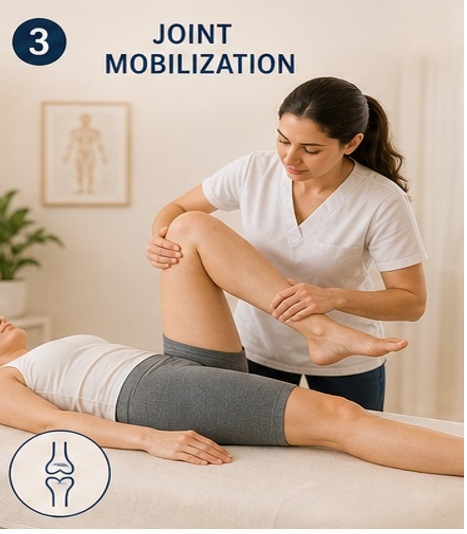
Restricted Range of Motion (ROM): Following orthopedic procedures (e.g., joint replacement, ligament repair, fracture fixation) where hypomobility persists despite healing.
Post-Surgical Adhesions & Fibrosis: To address intra-articular or periarticular adhesions limiting gliding and rolling joint mechanics.
Muscle Guarding & Protective Spasm: When surrounding musculature remains hypertonic due to pain or apprehension, contributing to joint stiffness.
speakers
Prairieosteopath.ca
Benefits of Joint Mobilization in Post-Surgical Patients
Restores Accessory Joint Motion: Directly targets the arthrokinematic movements (roll, slide, spin) essential for full, pain-free ROM – often impaired after immobilization or soft tissue trauma.
Breaks Down Pathological Adhesions: Low- to mid-grade oscillations applied in specific directions can help remodel early-stage scar tissue and prevent capsular contractures.
Modulates Pain: Rhythmic joint distraction and graded oscillations stimulate mechanoreceptors (type I & II) in the joint capsule, inhibiting nociceptive transmission via the gate control
Improves Synovial Fluid Movement: Enhances diffusion and circulation of synovial fluid, reducing joint friction and facilitating cartilage nutrition during early healing.
Restores Proprioception: Repetitive, controlled joint loading reactivates afferent pathways, improving joint position sense and reducing the risk of re-injury.
Reduces Edema Clearance Time: By promoting passive joint movement and facilitating lymphatic and venous return, it helps accelerate resolution of post-surgical effusion.
Schedule
prarieosteopath.ca
Importance of Joint Mobilization
Enables Safer Active Rehab: When performed before exercise, it can temporarily increase ROM and reduce stiffness, allowing more effective active therapeutic exercise.
Useful Links
Subscribe Now
Please subscribe to our page